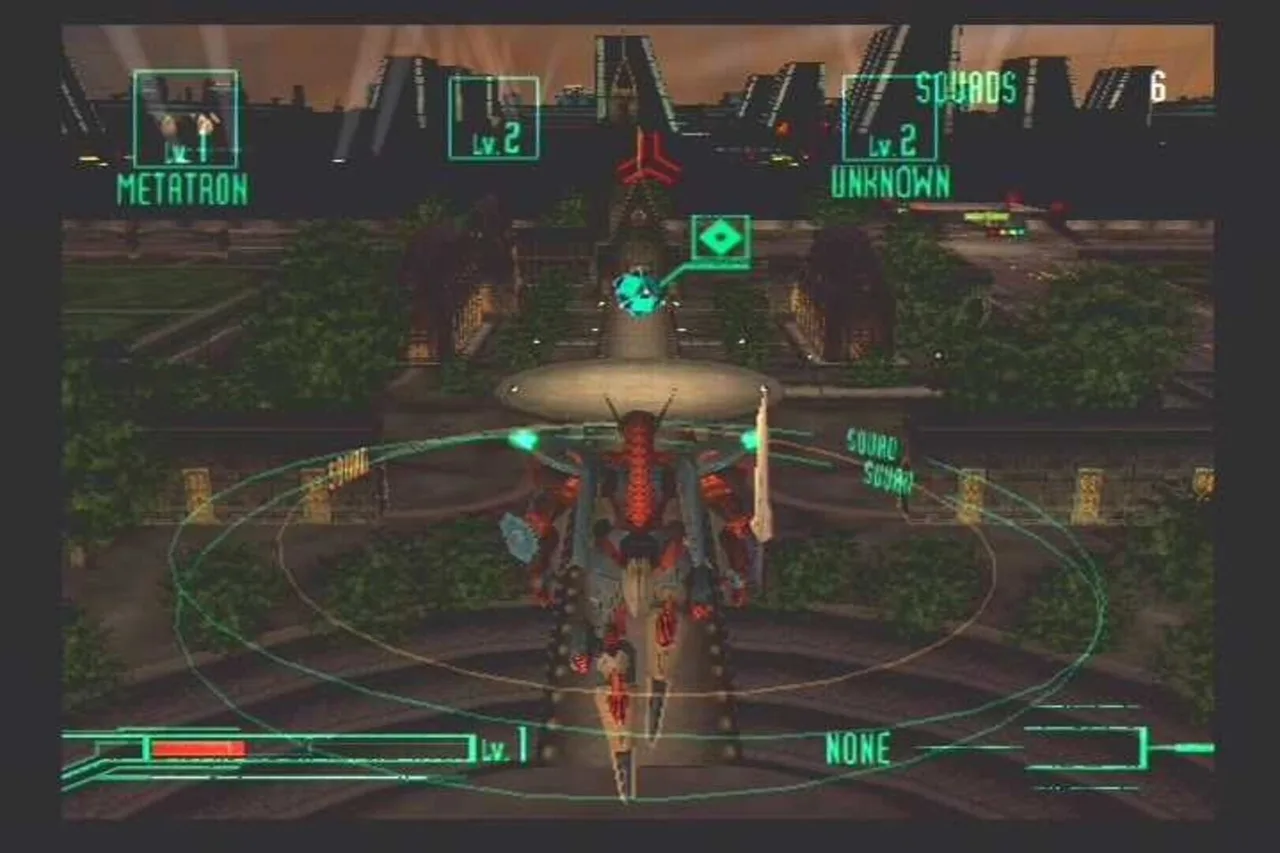
Zone of the Enders (2001)
Zone of the Enders is a 2001 shooter video game made by Konami Computer Entertainment Japan.
Leo Stenbuck is not a soldier. He is a teenager hiding in a cargo bay when the colony of Antilia comes under attack, and he stumbles into the cockpit of Jehuty, an experimental orbital frame of enormous combat capability, almost by accident. From there, the game is a fast, three-dimensional mech combat title set against the backdrop of a Martian colonial conflict, with Leo controlling Jehuty through docking-bay corridors and open space while an AI named A.D.A. guides and challenges him. Hideo Kojima produced; the tone is earnest shonen anime filtered through PS2 hardware pushing its limits.
Similar games
Explore Zone of the Enders guides
Zone of the Enders in our writing
A few thoughts on Zone of the Enders
Megazone 23 II is a direct anime ancestor of Zone of the Enders' premise: a young civilian caught inside a heavily armed mech during a colony-level conflict, with the weight of real casualties pressing on every fight.
Anime and manga where a strange machine reshapes an ordinary life
Zone of the Enders hands Leo Stenbuck an orbital frame he never trained to use, and his story becomes catching up to it. These anime and manga share that jolt: Ghost in the Shell's cybernetic bodies, Galaxy Express 999's mechanical train through the stars, Phoenix's sweeping sci-fi scope, Doraemon's pocket of impossible gadgets, and Megazone 23's virtual mecha city all treat technology as something that rewrites the person using it.
Concept albums that sound like a war fought in deep space
Zone of the Enders scores its Mars colony war with anime earnestness and PS2-era ambition, and these records chase the same widescreen scale. Deltron 3030 raps a future war from behind the controls of a giant machine, Ayreon's Universal Migrator sends its story past the solar system, the Blade Runner score invented synth dread, and Muse's Black Holes and Revelations and Simulation Theory stage humanity against something vast and mechanical.
Ordinary kid handed a power that isn't fully theirs yet
Leo Stenbuck falls into Jehuty's cockpit by accident, and Zone of the Enders spends its whole runtime on a teenager growing into power he never trained for. Avatar: The Last Airbender's Aang, Hunter x Hunter's Gon, Smallville's teenage Clark Kent, and Stranger Things' kids all face threats several sizes too large, forced to grow up inside a fight that started without their permission.