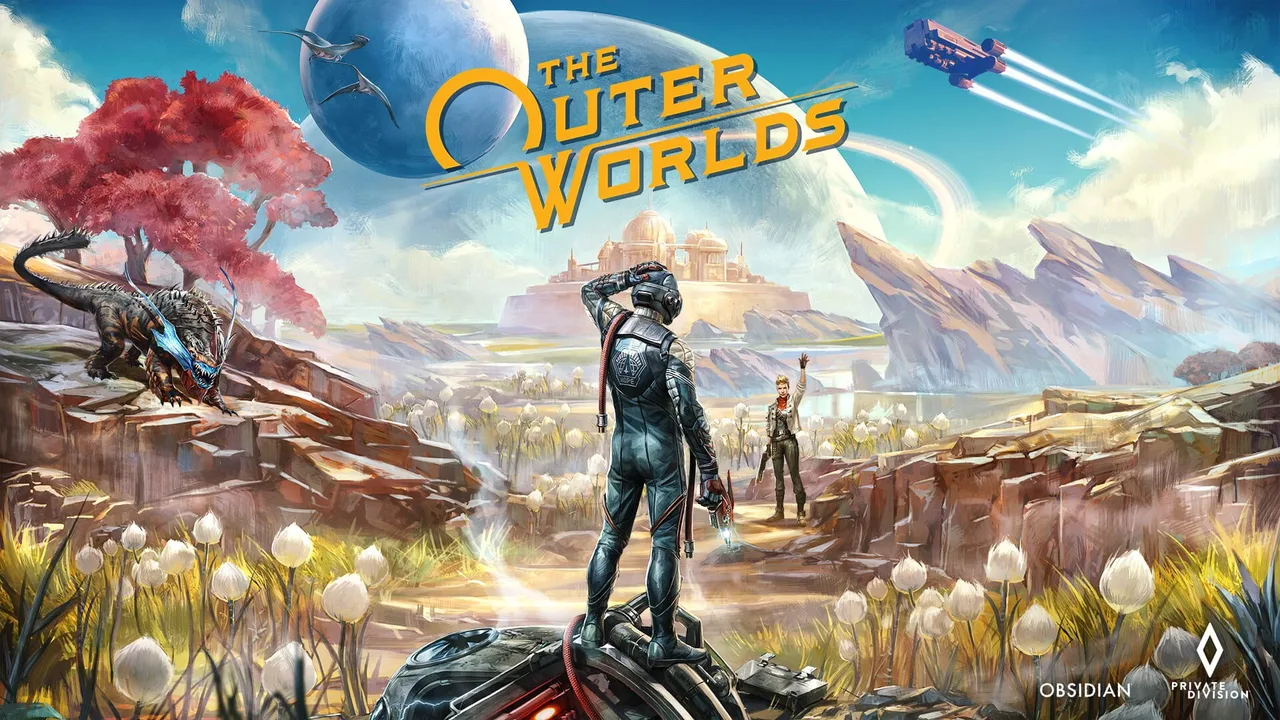
The Outer Worlds (2019)
The Outer Worlds is a 2019 shooter video game made by Obsidian Entertainment.
Halcyon is a frontier star system run by corporations that brand everything from breakfast cereal to your own funeral. You wake from cryo-sleep as the colony's unplanned variable, free to prop up the boardroom order or tear it down. Obsidian builds the pitch on sharp writing and reactive choice: recruit a crew of misfits, then talk, sneak or shoot through quests while factions remember exactly what you did. The satire runs black and the tone stays loose, closer to a workplace comedy about capitalism than a grim space opera. Short, dense, and unmistakably an Obsidian RPG.
Similar games
Explore The Outer Worlds guides
The Outer Worlds in our writing
- Companion guide: The CRPG: The Complete Guide to Computer Role-Playing Games
- Companion guide: Obsidian Entertainment: The RPG-Sequel Masters and Narrative Torchbearers
- Companion guide: Science-Fiction RPGs: Mass Effect, Rogue Trader and the Character Sheet Among the Stars
- Companion guide: Space Opera
A few thoughts on The Outer Worlds
The corporate satire lands hardest alongside The Boys, which skewers branded heroism with the same gleeful contempt for the C-suite. For the found-family crew and lived-in space-western vibe, Firefly is the obvious next stop. Readers should try Jennifer Government, Max Barry's novel of a world where companies have swallowed the state whole.
Stories where the corporation is the real villain
The Outer Worlds turns Halcyon's megacorporations into the punchline and the threat, branding cereal and funerals alike. The Boys skewers that same corporate ownership of everything worth trusting, Portal and Portal 2 trap test subjects inside Aperture Science's cheerful cruelty, and Deltron 3030 raps its way through its own corporate-run dystopia.
Found-family crews surviving out on the frontier
Halcyon hands you a crew of misfits to recruit and keep alive, and that found-family pull carries into Firefly's rogue transport crew, Old Man's War's banter among reluctant recruits, Galaxy Express 999's companions riding a train across the stars, and the Van der Linde gang scraping by on Red Dead Redemption 2's dying frontier.
Open-world RPGs that remember every choice you made
Obsidian built The Outer Worlds so factions remember exactly what you did, and that same weight shows up in The Witcher 3's contracts, Skyrim's freedom to solve a problem your own way, and the open heists of Grand Theft Auto V and San Andreas, where reputation and approach shape what happens next.
Cyberpunk moods with the same neon dread
Halcyon's frontier towns share a lineage with proper cyberpunk's neon dread. Ghost in the Shell wrestles with how much a cybernetic, corporate-owned body still belongs to you, Blade Runner's score set the template for that mood, and Muse's Black Holes and Revelations and Simulation Theory dress the same surveillance paranoia in arena rock.