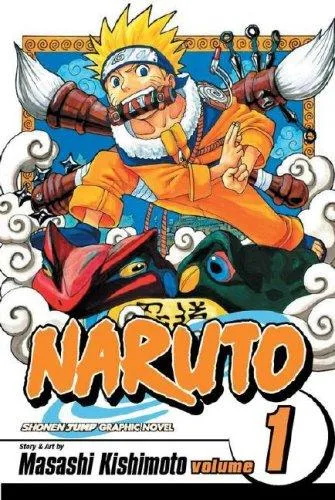
Naruto (1999)
Naruto is a 1999 action anime and manga title by Masashi Kishimoto.
The adults in his village look straight through the loudest kid in it. He answers by telling anyone within earshot that he will be running the place one day.
Naruto Uzumaki has no talent for being liked. He is isolated from the other children training as ninja, hungry for any scrap of recognition, and fixed on a single job: Hokage, the leader of the village. Masashi Kishimoto builds the run on how far that want carries a boy with more stamina than skill. The story arrives in two halves, the first set in Naruto's pre-teen years, the second in his teens, with the cast growing up alongside him.
Kishimoto wrote and drew it across seventy-two volumes of weekly serialization, starting in 1999. Two one-shots got him there: Karakuri in 1995, which took an honorable mention in Shueisha's Hop Step Award, and a first sketch of Naruto himself in 1997. Part of the pleasure is watching a young artist work out his own craft in public, week by week.
Starting now is a real commitment. The payoff is accumulation: rivals, teachers and background ninja who show up as one gag or one fight, then earn years of page time. Read three or four volumes and see whether Naruto's stubbornness lands as funny or grating. That reaction will hold for the other sixty-eight.
Similar titles
Explore Naruto guides
Naruto in our writing
- Companion guide: Battle Shonen: The Complete Guide to Fighting Anime
A few thoughts on Naruto
Same-era Shonen Jump is the natural next stop. Slam Dunk, Vol. 2 swaps ninja for basketball and keeps what Naruto does best: a loudmouth underdog among better-trained rivals who slowly start taking him seriously. Vagabond, Vol. 3 is Takehiko Inoue again in a darker key, a swordsman's apprenticeship drawn with brush-heavy realism, for readers who want the training-and-rivalry shape without the comedy. Chainsaw Man, Vol. 7 shows what the same magazine became two decades later: faster, meaner, much less patient with speeches.
On screen, The Elusive Samurai follows a young heir in medieval Japan who survives by evasion rather than strength, a quieter cousin to Naruto's scrappiness. Naruto Shippuden: Ultimate Ninja Storm 4 is the shortcut to seeing the fights animated without signing up for the full episode count.
Naruto on screen, and the games worth a weekend
Kishimoto's manga ran to 72 volumes, and the 2002 anime tracks it chapter for chapter through the early arcs before the filler starts. Shippuden covers the second half. The films run as side stories you can take in any order, the Ultimate Ninja Storm games hand you the jutsu, and Boruto passes the village to the next class.
Ninja manga and films beyond the Naruto shelf
Naruto borrows its hand signs, hidden villages and clan feuds from a long shelf. Shirato Sanpei put class warfare into ninja comics in the 1960s with The Legend of Kamui, and Oshima filmed his panels as Band of Ninja. Under Ninja drops shinobi into modern Tokyo as unemployed contractors, and Ninja Boy Rantaro plays the training school for laughs.
Shonen epics where the underdog outworks the prodigy
Naruto opens on a boy who keeps failing the graduation exam and tells the village he will run it anyway. Luffy makes the same noise about the pirate king, Sakuragi picks up a basketball at 15 with reach and stubbornness and nothing else, and Arata and Basara each drop an ordinary teenager into a throne's worth of expectation.
Manga about kids handed power the adults cannot manage
The village seals a monster inside Naruto and then raises him at arm's length, and Kishimoto spends the early volumes on what that isolation does to a nine-year-old. Shadow Star and 18if put the same weight on children, Attack on Titan drafts teenagers into a standing army, and Death Note starts with a bored student and one notebook.