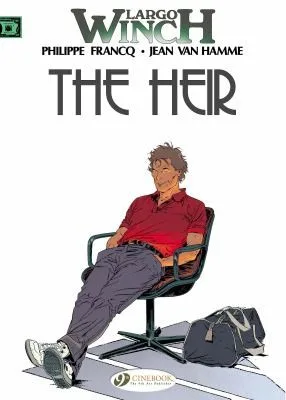
Largo Winch
Largo Winch is an adventure fiction title by Jean Van Hamme and Philippe Francq.
Jean Van Hamme shelved this hero once already. Largo Winch started life as prose novels in the late 1970s, found few readers, and stopped while Van Hamme's comics work took over his schedule. Years later the artist Philippe Francq came looking for a series to build with him, so Van Hamme went back for the character he had abandoned and rewrote those novels as the first albums of a Dupuis series that kept going long after the original books ran out.
The album is the piece to understand if you come from American comics. There is no monthly floppy in this tradition. Each album is published as a finished hardcover, in colour, sold as a book rather than an issue, with Van Hamme writing and Francq drawing across the whole run instead of a creative team rotating every year. Instalments arrive years apart, and readers buy them the way you buy novels in a series.
Adventure fiction is the shelf it sits on, and the adaptations point at the register: a television series in 2001 and three feature films between 2008 and 2024, titled around an heir and the price of money. The appeal is a European thriller hero with one writer and one artist behind him the whole way.
Official site
Similar titles
Explore Largo Winch guides
A few thoughts on Largo Winch
Start with the screen versions, since they carry the same hero at two different speeds. Largo Winch, the 2001 television series, delivers him in episodes, which suits a character built for instalments. The films condense instead: The Heir Apparent: Largo Winch in 2008, Largo Winch II in 2011, and Largo Winch: The Price of Money in 2024, a run spanning sixteen years that shows how much appetite there was for the material outside the albums. For something past the franchise, Arsène Lupin gives you the French gentleman-adventurer tradition Largo Winch sits inside: a charming, capable lead moving through self-contained escapades, told in the serial habit European audiences kept long before these albums existed.