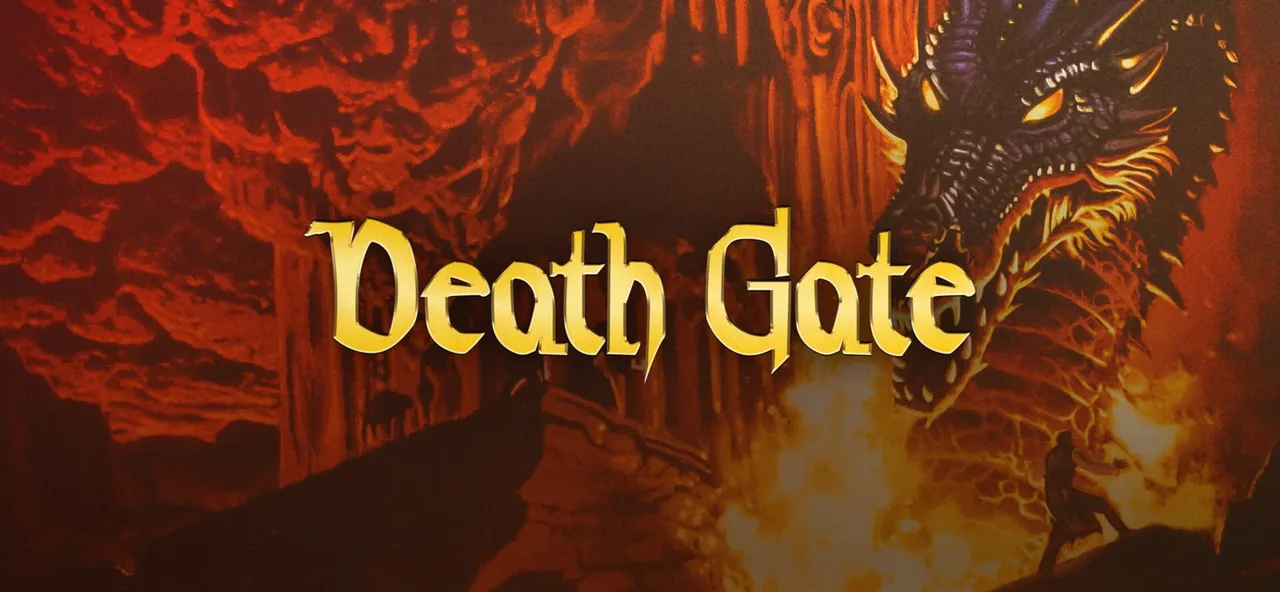
Death Gate (1994)
Death Gate is a 1994 puzzle video game made by Legend Entertainment.
Based on Margaret Weis and Tracy Hickman's Death Gate Cycle novels, this 1994 adventure drops you into the role of Haplo, a Patryn sorcerer released from the Labyrinth to explore a sundered world. The cosmos has been shattered into four elemental realms, and Haplo travels between them as an agent of his lord, gathering intelligence on races who have no memory of the catastrophe that split their universe. Legend Entertainment's adaptation carries the novels' mix of intricate lore, dry wit, and puzzle-forward design, with fourth-wall jokes and puns woven into a genuinely layered fantasy story.
Similar games
Explore Death Gate guides
Death Gate in our writing
A few thoughts on Death Gate
If the fractured-universe lore hooked you, the source novels by Weis and Hickman are the obvious next step. For something with the same irreverent puzzle-adventure spirit, The King's Quest Companion captures the era's fondness for literary fantasy games played with a knowing wink.
Puzzle adventures with a story worth solving them for
Death Gate wraps Haplo's puzzle-solving mission in the wit and lore of Weis and Hickman's novels, and these pair puzzles with story that way. Rusty Lake: Roots and The Room 4: Old Sins build their worlds through objects and mechanisms you have to understand before you can move on, Blacksad: Under the Skin folds its puzzles into a noir mystery, and Forgotton Anne gives its puzzle-platforming a lived-in fantasy world.
Epic fantasy with lore so dense you need to take notes
Death Gate carries a cosmology split into four elemental realms with centuries of history behind it, and these ask for that same commitment to lore. Wizard and Glass detours deep into Roland's past inside Stephen King's multiverse, Oathbringer piles Sanderson's Stormlight Archive higher with magic systems and political history, Brisingr keeps Alagaesia's dragon-rider mythology churning, and Fullmetal Alchemist pairs its alchemical rulebook with dry, dark wit Haplo would recognize.
Worlds broken into realms that each run on their own rules
Death Gate's cosmos was shattered into four elemental realms, and these build worlds that way. Avatar: The Last Airbender splits its world into four elemental nations, Made in Abyss descends through layers that punish you differently the deeper you go, Planet Alpha strands you on an alien world you have to learn from scratch, and The Girl Who Drank the Moon layers its fairy tale with rules of its own.
Prog rock and film scores built for sprawling fantasy worlds
Death Gate's shattered cosmos and buried history call for music with the same scale, and these albums deliver it. In the Court of the Crimson King set the template for prog rock built around myth and dread, The Return of the King soundtrack scores an ending centuries in the making, IX Equilibrium leans into dark, orchestral fantasy atmosphere, and The Spectre Within carries that sword-and-sorcery weight in a metal register.