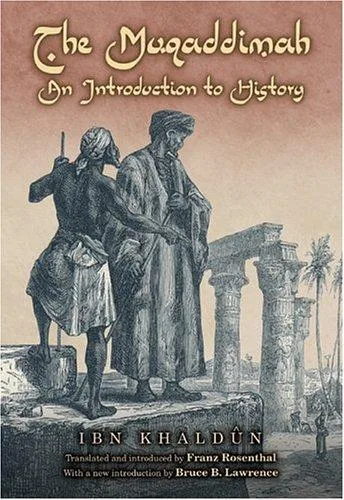
The Muqaddimah, an introduction to history (1969)
The Muqaddimah, an introduction to history is a 1969 early works to 1800 book written by Ibn Khaldūn and Ibn Khaldun.
Ibn Khaldun wrote this prologue to his universal history in 1377, and it reaches far past its stated job. Across its chapters he probes why dynasties rise and fall, why cities flourish and rot, and how climate, trade, and kinship shape the character of peoples. His central idea, asabiyyah or group solidarity, names the fierce cohesion that lets a tribe conquer and the soft luxury that later dissolves it. Scholars now read the work as an early reach toward sociology, economics, and demography, written six centuries before those disciplines had names. This edition is Franz Rosenthal's three-volume translation, first published in 1958.
Similar books
Explore The Muqaddimah, an introduction to history guides
A few thoughts on The Muqaddimah, an introduction to history
The book's engine, dynasties that conquer through solidarity and decay in comfort, is the exact loop players live inside Crusader Kings III, where a house climbs on loyalty and crumbles once the heirs grow soft, spoiled, and scheming.
Games where you build an empire and watch it crumble
Ibn Khaldun's asabiyyah, the group cohesion that builds power and dissolves in luxury, plays out turn by turn in these historical strategy and action games. Crusader Kings III lets a dynasty rise then rot across generations, while the Assassin's Creed entries drop you into Renaissance Italy, Papal Rome, Revolutionary America and the Caribbean as empires strain under their own weight.
TV dynasties that rise on loyalty and fall on greed
Vikings, The Last Kingdom, Spartacus: House of Ashur and Peaky Blinders all trace what The Muqaddimah calls the arc of group solidarity: a hard, hungry clan claws its way to power, then softens into the very comfort that undoes it. Each show stages that cycle through raiders, kingdoms and crime families instead of caliphates.
Old-world testimonies that still explain how power works
Musashi's Gorin no sho, Graeber's Debt and Frederick Douglass's Narrative are, like The Muqaddimah, firsthand attempts to name the forces, discipline, exchange, bondage, that hold societies together or tear them apart. An autobiography joins them as one more life examined for the larger pattern Ibn Khaldun spent his prologue chasing.
True stories of ambition that curdles into downfall
The Muqaddimah traces how fierce, hungry solidarity curdles into soft decline once power is won. GoodFellas, The Wolf of Wall Street, Oppenheimer, Catch Me If You Can and The Pursuit of Happyness are modern versions of that same arc: ordinary ambition scaling into empire, then meeting the reckoning that ambition always invites.