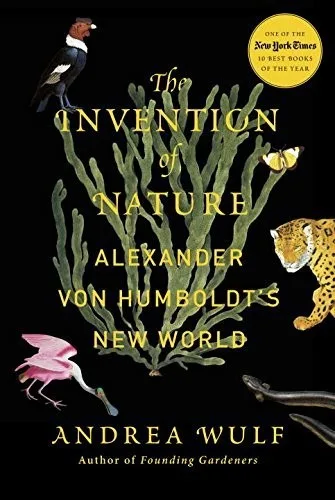
The Invention of Nature (2015)
The Invention of Nature is a 2015 scientists book written by Andrea Wulf.
From the Prologue...
When nature is perceived as a web, its vulnerability also becomes obvious. Everything hangs together. If one thread is pulled, the whole tapestry may unravel. After he saw the devastating environmental effects of colonial plantations at Lake Valencia in Venezuela in 1800, Humboldt became the first scientist to talk about harmful human-induced climate change. Deforestation there had made the land barren, water levels of the lake were falling and with the disappearance of brushwood torrential rains had washed away the soils on the surrounding mountain slopes. Humboldt was the first to explain the forest's ability to enrich the atmosphere with moisture and its cooling effect, as well as its importance for water retention and protection against soil erosion. He warned that humans were meddling with the climate and that this could have an unforeseeable impact on ‘future generations'.
The Invention of Nature traces the invisible threads that connect us to this extraordinary man. Humboldt influenced many of the greatest thinkers, artists and scientists of his day. Thomas Jefferson called him ‘one of the greatest ornaments of the age'. Charles Darwin wrote that ‘nothing ever stimulated my zeal so much as reading Humboldt's Personal Narrative,' saying that he would not have boarded the Beagle, nor conceived of the Origin of Species, without Humboldt. William Wordsworth and Samuel Taylor Coleridge both incorporated Humboldt's concept of nature into their poems. And America's most revered nature writer, Henry David Thoreau, found in Humboldt's books an answer to his dilemma on how to be a poet and a naturalist, Walden would have been a very different book without Humboldt. Simón Bolívar, the revolutionary who liberated South America from Spanish colonial rule, called Humboldt the ‘discoverer of the New World' and Johann Wolfgang von Goethe, Germany's greatest poet, declared that spending a few days with Humboldt was like ‘having lived several years'.
Quick answers
What is The Invention of Nature about?
From the Prologue... When nature is perceived as a web, its vulnerability also becomes obvious. Everything hangs together. If one thread is pulled, the whole tapestry may unravel. After he saw the devastating environmental effects of colonial plantations at Lake Valencia in Venezuela in 1800, Humboldt became the first scientist to talk about harmful human-induced climate change. Deforestation there had made the land barren, water levels of the lake were falling and with the disappearance of brushwood torrential rains had washed away the soils on the surrounding mountain slopes. Humboldt was the first to explain the forest's ability to enrich the atmosphere with moisture and its cooling effect, as well as its importance for water retention and protection against soil erosion. He warned that humans were meddling with the climate and that this could have an unforeseeable impact on ‘future generations'. The Invention of Nature traces the invisible threads that connect us to this extraordinary man. Humboldt influenced many of the greatest thinkers, artists and scientists of his day. Thomas Jefferson called him ‘one of the greatest ornaments of the age'. Charles Darwin wrote that ‘nothing ever stimulated my zeal so much as reading Humboldt's Personal Narrative,' saying that he would not have boarded the Beagle, nor conceived of the Origin of Species, without Humboldt. William Wordsworth and Samuel Taylor Coleridge both incorporated Humboldt's concept of nature into their poems. And America's most revered nature writer, Henry David Thoreau, found in Humboldt's books an answer to his dilemma on how to be a poet and a naturalist, Walden would have been a very different book without Humboldt. Simón Bolívar, the revolutionary who liberated South America from Spanish colonial rule, called Humboldt the ‘discoverer of the New World' and Johann Wolfgang von Goethe, Germany's greatest poet, declared that spending a few days with Humboldt was like ‘having lived several years'.
When was The Invention of Nature published?
The Invention of Nature was published in 2015.
Who made The Invention of Nature?
The Invention of Nature was written by Andrea Wulf.
