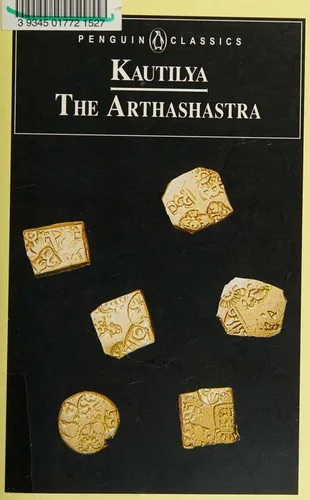
The Arthashastra (1992)
The Arthashastra is a 1992 early works to 1800 book written by Kauṭalya..
A working manual for running a kingdom, composed in ancient India and attributed to Kautilya, the strategist also known as Chanakya. Its books cover taxation, law, espionage, diplomacy, agriculture, war, and the daily management of a state, all in blunt practical detail: how to fill a treasury, run a spy network, judge a dispute, keep power. Scholars now read it as a text compiled and expanded over centuries rather than one author's single work. Clear-eyed and unsentimental about how rulers actually behave, it sits beside Machiavelli and Sun Tzu as a foundational treatise on the mechanics of power.
Similar books
Explore The Arthashastra guides
A few thoughts on The Arthashastra
The Arthashastra reads as a manual for the cold power politics that fiction loves to dramatize. Game of Thrones runs on its logic of spies, alliances, and expendable loyalties, while strategy games like Sid Meier's Civilization drop you into the ruler's seat Kautilya writes for, balancing treasury, army, and diplomacy turn by turn against rivals who want what you have.
Games about running an empire, not just conquering one
The Arthashastra is a working manual for running a kingdom, covering taxation, espionage and law in blunt practical detail. Sid Meier's Civilization VI turns that same nuts-and-bolts statecraft into direct play, taxes, diplomacy and spies included. Assassin's Creed II and Assassin's Creed: Brotherhood layer their action inside real political power struggles and secret networks, and The Elder Scrolls IV: Oblivion builds its fantasy empire on the same guilds and courtly maneuvering.
Nonfiction that strips away sentiment about how power actually works
The Arthashastra is clear-eyed and unsentimental about how rulers behave, treating taxation, espionage and law as tools rather than ideals. The Book of Five Rings reduces swordsmanship and command to the same kind of blunt practical instruction, Debt traces that same unsentimental logic through the history of money and obligation, and Frederick Douglass's Narrative describes power from the ground level, as something to be survived and outmaneuvered.
Court dramas where politics is deadlier than any battlefield
The Arthashastra treats court politics, spies and rivals as the real battlefield of any kingdom, a lesson fiction keeps returning to. Kingdom follows a war fought as much in the throne room as on any field, The Apothecary Diaries turns an imperial court into a maze of poison and rumor, and Game of Thrones and The Last Kingdom let scheming councils decide outcomes armies alone never could.
Stories about what it actually costs to build and hold power
The Arthashastra never pretends that holding power is romantic, it's taxation, spies and hard tactical choices. Rise of the Conqueror and Vikings follow leaders expanding their reach through the same blunt calculation the text describes, Oppenheimer traces how a devastating kind of power reshapes the people who wield it, and Goodfellas and The Wolf of Wall Street show the same ruthless math on a different scale.