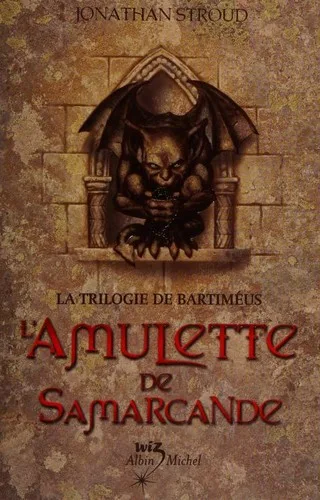
The Amulet of Samarkand (2003)
The Amulet of Samarkand is a 2003 genies book written by Jonathan Stroud.
In a London ruled by magicians, all their power comes from the spirits they enslave, and few spirits resent the arrangement as loudly as Bartimaeus. Summoned by Nathaniel, a talented and badly underestimated apprentice, the five-thousand-year-old djinni is ordered to steal the Amulet of Samarkand from Simon Lovelace, a magician with a cruel streak and dangerous friends. The job goes about as smoothly as forced servitude tends to. Jonathan Stroud splits the telling between a scheming boy and a wisecracking demon, building an alternate-history caper thick with politics, footnotes, and mutual contempt. Sharp, funny, and darker than its cover lets on.
Similar books
Explore The Amulet of Samarkand guides
The Amulet of Samarkand in our writing
- Companion guide: Academies of Magic: The Complete Guide to Magic Schools
- Companion guide: Portal Fantasy Classics: Wardrobes, Owl Post and the Doors That Started It All
- Companion guide: The Thieves' Guild: Rogues, Heists and the Fantasy Underworld
- Companion guide: Wizards & Magic Schools
A few thoughts on The Amulet of Samarkand
The historical theft and city-spanning conspiracy of Assassin's Creed II matches the book's caper inside a magician's capital. For fantasy where power corrupts everyone who holds it, Game of Thrones is the obvious screen jump. The Witcher 3: Wild Hunt carries the same sardonic, monster-touched wit.
Fantasy where summoning a spirit means striking a dangerous bargain
Bartimaeus never lets Nathaniel forget that summoning him was a contract, not a friendship, and that every spirit bound to a magician is one grudge away from breaking loose. Black Butler turns that same master-and-demon arrangement into its whole premise, xxxHolic trades wishes for prices nobody reads the fine print on, and Dororo and Inuyasha build their worlds around demons who serve, resent, and outwit the humans holding their leash.
Epic political fantasy where the powerful scheme against each other
The real danger in The Amulet of Samarkand is never the theft itself but the magicians circling each other in Parliament, each one plotting a rival's downfall. House of the Dragon and Game of Thrones run entire seasons on that same court-level knife fight, while Gardens of the Moon, Oathbringer, and The Secret of the Nagas scale the scheming up to empires and living gods still playing the same game.
Treasure-hunting games driven by quick banter between unequal partners
Bartimaeus narrates half the book like he's doing Nathaniel a favor he'll never let him forget, and that mismatched, wisecracking partnership is the real engine of the story. Nathan Drake needles Sully and Elena through two Uncharted games with the same kind of banter, Ezio picks up mentors who never quite treat him as an equal, and Booker and Elizabeth argue their way through Columbia trying to escape it.