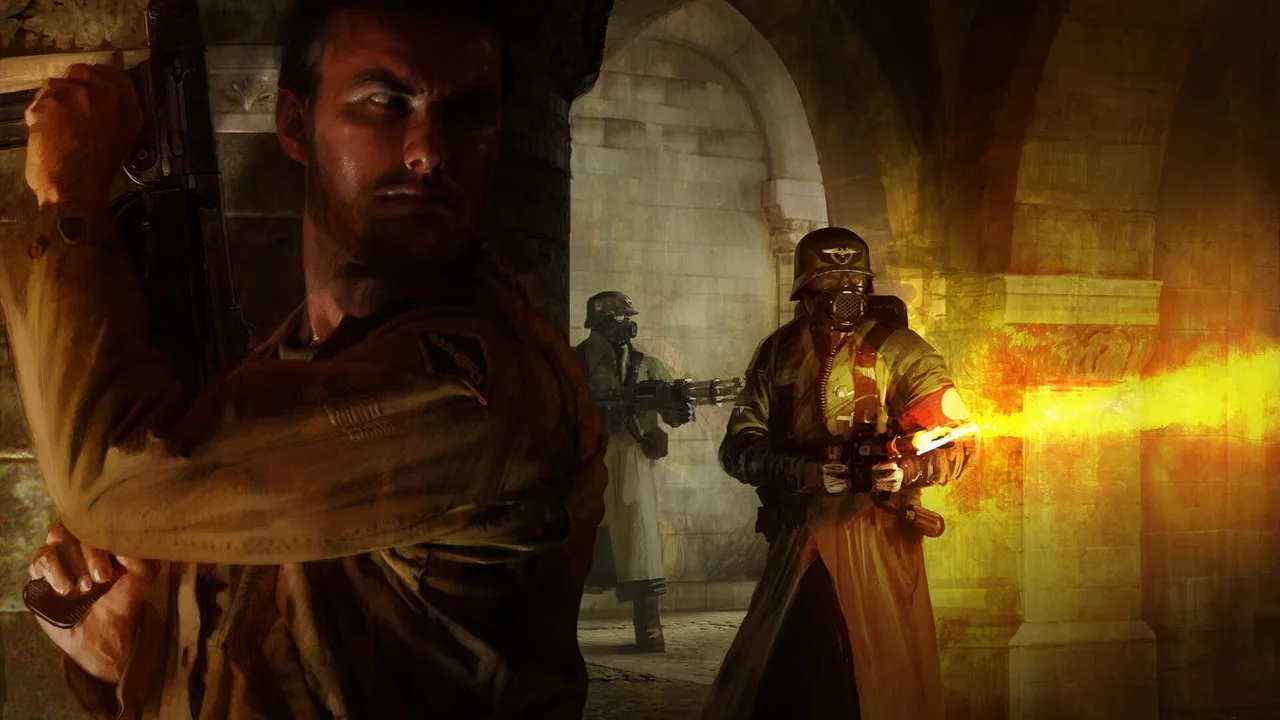
Return to Castle Wolfenstein (2001)
Return to Castle Wolfenstein is a 2001 shooter video game made by Gray Matter Interactive and Westlake Interactive.
Return to Castle Wolfenstein sends Allied spy B.J. Blazkowicz into occupied Germany on a mission that begins as a prison break and sprawls into something far stranger. The game runs two registers at once: grounded World War II corridor shooting with real weapons and real factions, and a pulp-horror undercurrent involving SS occult experiments and resurrected soldiers. id Software's technology drove the 2001 release, and the included multiplayer, with Axis and Allies completing separate objective sets, shipped what became one of the most imitated team-shooter templates of its era.
Similar games
Explore Return to Castle Wolfenstein guides
Return to Castle Wolfenstein in our writing
- Companion guide: Alternate History
A few thoughts on Return to Castle Wolfenstein
Return to Castle Wolfenstein runs two tones at once and never lets either swallow the other. The World War II shooting is grounded enough to feel tense, and the SS occult subplot escalates into full-blown horror without ever breaking the game's internal logic. B.J. Blazkowicz moves through a Gestapo prison, a haunted village crypt, and a rocket facility, and each environment feels like it belongs to the same coherent nightmare. The team-based multiplayer, with Axis and Allies completing separate objectives on the same map, shipped a template that competitive shooters copied for years.
Metal that treats war and the occult as the same nightmare
Return to Castle Wolfenstein fuses real WWII combat with SS occult experiments and reanimated soldiers, treating history and horror as one threat. Iron Maiden's The Number of the Beast and Piece of Mind mine similar ground between war and the demonic, Judas Priest's Painkiller turns apocalyptic imagery into pure speed, Cradle of Filth's IX Equilibrium goes fully into occult extremity, and Death's Leprosy carries real dread underneath the aggression.
Warriors bound by a code stricter than survival
B.J. Blazkowicz operates by his own code even as the mission turns stranger and more supernatural. The Book of Five Rings lays out Musashi's philosophy of disciplined combat, Rurouni Kenshin follows a former assassin bound by a vow against killing, Asterix turns resistance against an empire into a way of life for a village, and The Song of Achilles roots every choice in a warrior code older than the war.