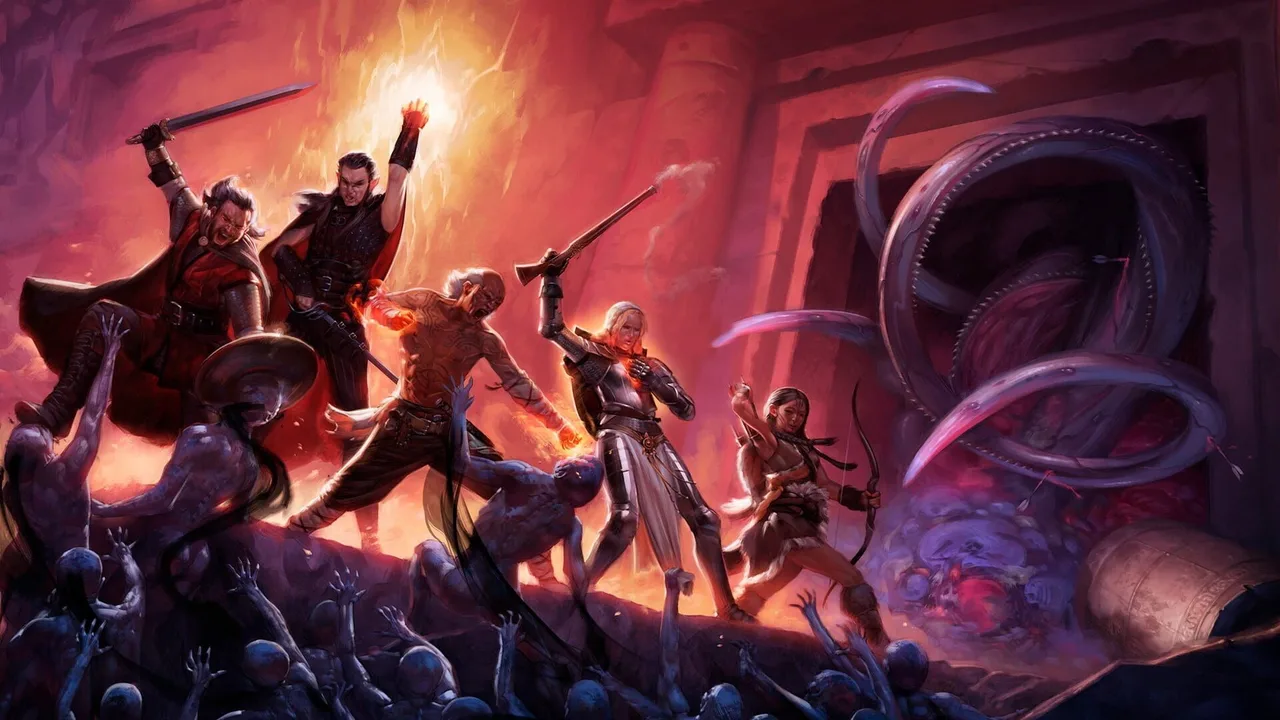
Pillars of Eternity (2015)
Pillars of Eternity is a 2015 role-playing (rpg) video game made by Obsidian Entertainment.
A soul torn open by a roadside ritual makes you a Watcher, able to read the past lives buried inside everyone you meet. Obsidian builds Eora as a place of hard theology and harder politics: gods who may be fabrications, a plague of soulless newborns, a frontier colony called the Dyrwood raw with grief. You gather companions, argue morality across long conversations, and settle fights with pausable real-time tactics on hand-painted maps. The register is grown-up and melancholy, closer to Planescape than to swords-and-dragons comfort. Every ruin holds a question about what a soul is worth.
Similar games
Explore Pillars of Eternity guides
Pillars of Eternity in our writing
A few thoughts on Pillars of Eternity
For the same morally-grey fantasy, Game of Thrones and House of the Dragon trade heroes for schemers and gods for dynasties. Wizard and Glass carries the Dark Tower's lonely-quest melancholy. In print, chase Steven Erikson's Malazan for its soul-magic and warring gods, or Joe Abercrombie's The First Law for grim, funny, deeply human villainy.
Fantasy political epics where the throne matters more than the dragons
The Dyrwood in Pillars of Eternity is a raw frontier colony caught between gods, plagues, and competing claims to rule, and these lean the same way. House of the Dragon and Game of Thrones treat succession as the real battlefield, while Gardens of the Moon, Oathbringer, and Wizard and Glass surround their magic with empires, factions, and grudges centuries deep.
RPG companions who carry real grief instead of quest markers
The Watcher's companions in Pillars of Eternity argue broken histories at every campfire, and these follow suit. The Witcher 3 gives Geralt a found family forged from loss, God of War pairs a god with the son he barely knows, Red Dead Redemption 2 turns a dying gang into its own family, and Skyrim and The Last of Us build bonds out of people who already lost everything.
Music for standing in old ruins and wondering what got left behind
Eora's ruins in Pillars of Eternity hide gods, machines, and questions nobody wants answered, and this music sits in the same mood. In the Court of the Crimson King and The Spectre Within favor slow dread over hooks, IX Equilibrium goes for symphonic scale, and the Return of the King score turns a long walk through ruins into something closer to myth.
Comics about people who pay a real price for the power they're given
Every soul the Watcher touches in Pillars of Eternity comes with a debt, and these comics run on the same exchange. Fullmetal Alchemist treats power as something bought with a body or memory, My Hero Academia hands its lead a power meant for someone else, Rurouni Kenshin follows a killer trying to atone for his past, and Assassination Classroom and Inuyasha put people next to forces that could unmake them.