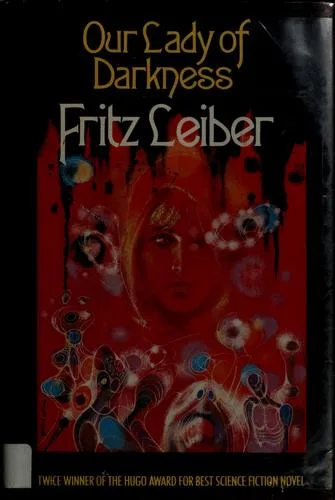
Our Lady of Darkness (1977)
Our Lady of Darkness is a 1977 fantasy book written by Fritz Leiber and Charles Busch.
San Francisco does the haunting in Fritz Leiber's 1977 novel. Franz Westen, a horror writer with binoculars and a window facing the hills, spends his afternoons studying the city he loves. One of those afternoons he picks out a figure on Corona Heights, two miles off, waving back at him.
Leiber builds the book on megapolisomancy, an occult science he invents and then works out in careful detail, and on the idea that a curse can run through a city for a century and brush the writers living in it. Clark Ashton Smith and Jack London belong to that lineage, which puts real literary San Francisco inside the fiction and keeps the whole thing hard to dismiss.
The scares stay quiet and cerebral. Jungian psychology shapes the way Franz reads his own dread, and the autobiographical streak gives the apartment, the paperbacks and the city walks a lived-in weight that most invented horror lacks. An earlier, shorter version appeared as The Pale Brown Thing. Readers who want gore should look elsewhere. Readers who like weird fiction that treats a street map as an occult document, and a lonely man at a window as a genuine emergency, have their book.
Similar books
Explore Our Lady of Darkness guides
A few thoughts on Our Lady of Darkness
Marianne is the natural next stop: a horror novelist finds what she invented waiting for her in the world, and the French series plays it with the cold patience Leiber uses. The Fog shares the Northern California coast and the conviction that a place keeps its debts. The Others suits anyone who wants the dread dry and the house quiet. In comics, A Contract with God makes one city building the whole moral universe, which is Leiber's argument in another key, and My Favorite Thing Is Monsters runs on a girl's obsession with horror magazines in a city holding its secrets. Nosferatu is worth an evening too, the silent original of a shadow moving through streets that belong to it.
Horror where the city itself is the monster
Franz Westen's enemy in Our Lady of Darkness is San Francisco: the hills, the TV masts, the weight of a century of poured concrete. Leiber invents a whole occult science, megapolisomancy, to explain it. These pick up the same idea, a street plan or a small town turning on the people who live inside it.
Classic weird fiction for readers who came in through Leiber
Our Lady of Darkness runs on a literary bloodline. Clark Ashton Smith and Jack London sit in the plot as former residents of a cursed city, and Leiber assumes you already read horror. This is the older shelf he writes back to, Poe and Wharton and the Gothic scholarship that traces where those chills started.
- Great Tales of Terror (Black Cat / Cask of Amontillado / Fall of the House of Usher / Ligeia / Pit and the Pendulum)
- The Ghost stories of Edith Wharton
- The Nightmare Reader
- Nosferatu
- Sexuality And The Gothic Magic Lantern Desire Eroticism And Literary Visibilities From Byron To Bram Stoker
- The Lamp from the Warlock's Tomb
Slow hauntings that build dread without gore
Leiber spends pages on binoculars, afternoon light and a figure two miles off on Corona Heights before anything touches Franz. Our Lady of Darkness earns its scares by waiting. These films and series work the same patient way, letting a room or a hillside sit wrong for an hour before anyone names the reason.
Gothic comics set in buildings that feel haunted
Franz reads a cracked occult pamphlet in a rented room, then starts seeing what it describes on the hill outside his window. Our Lady of Darkness keeps its horror indoors, in tenement stairwells and a writer's own bookshelf. These comics haunt the same kind of address, drawn floor by floor, with something living in the walls.