Mais Você (1999)
Mais Você is a 1999 Portuguese-language talk series. It stars Ana Maria Braga, Tahira Marranch and Fábio Caniatto.
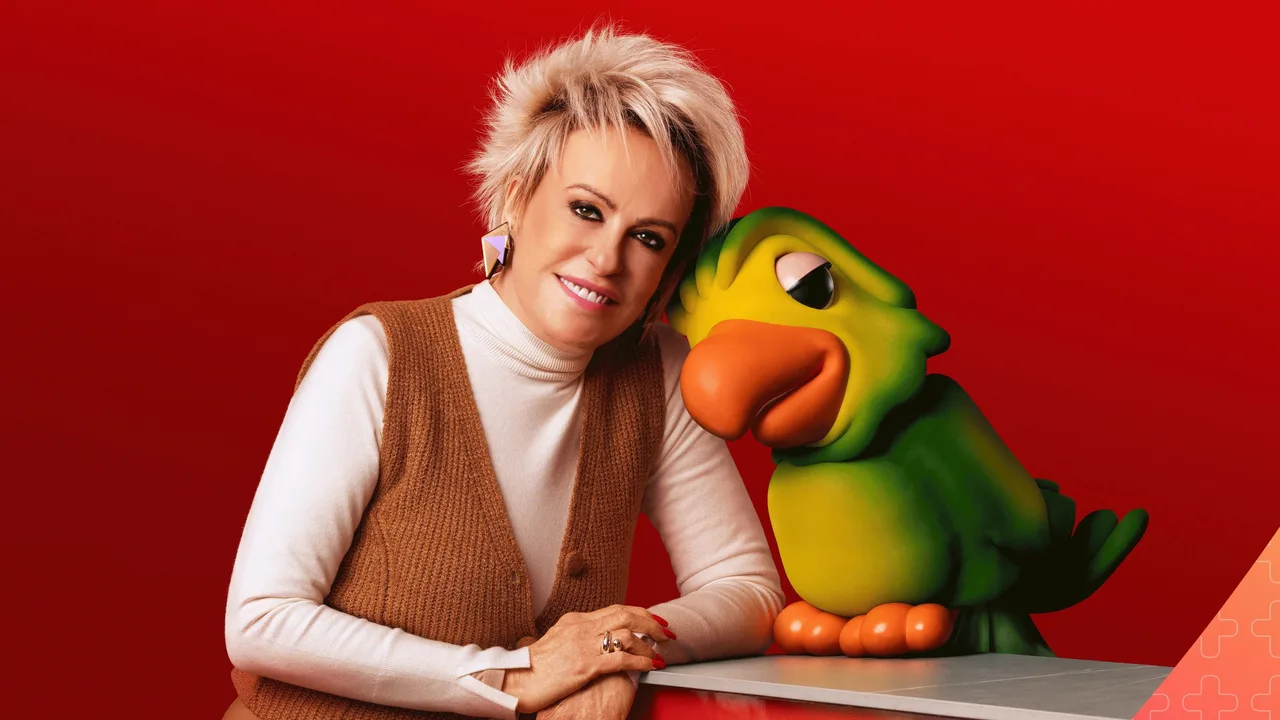
Coffee, a hot stove, and a parrot heckling from the end of the counter. Mais Você has opened TV Globo's weekday mornings since 1999, and Ana Maria Braga has stood at that counter for the whole run, cooking something, talking to whoever sat down beside her, letting the hour drift where the morning takes it.
The format lands between a cooking programme and a living-room conversation. Braga makes a dish start to finish on live television, narrating each step to viewers she assumes are half listening while getting the kids out the door. Around the recipe sit interviews, studio games, musical guests and the day's news, handled at a domestic scale rather than a newsroom one. For years the comic weight fell on Louro José, the oversized parrot puppet performed by Tom Veiga, who talked back to the host, got the recipe wrong, and gave her someone to play against when no guest was booked.
Braga is the reason the thing has run this long: unhurried, quick to laugh at a collapsed cake, happy to let a segment overstay. Brazilian viewers treat her the way other countries treat a morning radio voice, background that turns into company. For an outsider the show works as a plain window on Brazilian daily life, what gets eaten, worried over and joked about before nine in the morning.
Official site
Cast
Similar series
Explore Mais Você guides
A few thoughts on Mais Você
Stay with the food and go Brazilian first. Estômago: A Gastronomic Story takes the same country and the same ingredients somewhere much colder, a film about a man who discovers that whoever runs the kitchen runs the room. Braga's audience knows cooking as comfort, and it pays to see it as leverage.
On the shelf, Food in history does at book length what the show does in fragments, tracing what people have eaten and why the habit stuck. Good background for anyone who has wondered where a national dish comes from.
For the same easy morning temperature, try Ristorante Paradiso, a manga set in a small Roman restaurant where the cooking matters less than the people standing around it. Low stakes, warm company, the same register as a weekday morning with the television on.
Cooking shows where the host makes the whole dish on air
Ana Maria Braga cooks a full recipe live on Mais Você every weekday, narrating each step for viewers who are half listening while packing school bags. These shows share the setup: a host at a working stove, a camera close on the pan, a dish that has to finish inside the hour. Competition and celebrity guests come and go; the cooking holds the hour together.
Stories where the cooking is the point, on the page and on screen
Mais Você gives the recipe the center of its hour, a full dish cooked start to finish on air. These books, comics and films do the same with food: a manga about a young cook feeding a maiko house in Kyoto, a history of what Europe ate, a Brazilian film that follows one cook up through the kitchens he works in.
TV formats that have held the same slot for decades
Mais Você has opened TV Globo's weekday mornings since 1999, with the same host at the same counter for the whole run. That kind of tenure changes a show: people watch out of habit, and the format bends around whoever stands in front of it. Everything here has held its slot long enough to outlast the trends it started in.
Talk formats that let the guest tell the story
Beside the stove on Mais Você sits a chair, and Braga lets the conversation drift where the guest takes it. These follow the same thread: a Brazilian show built on guests recounting stories from their own lives, a film that is two men talking through one dinner, and a sociologist's study of how broadcast talk works.