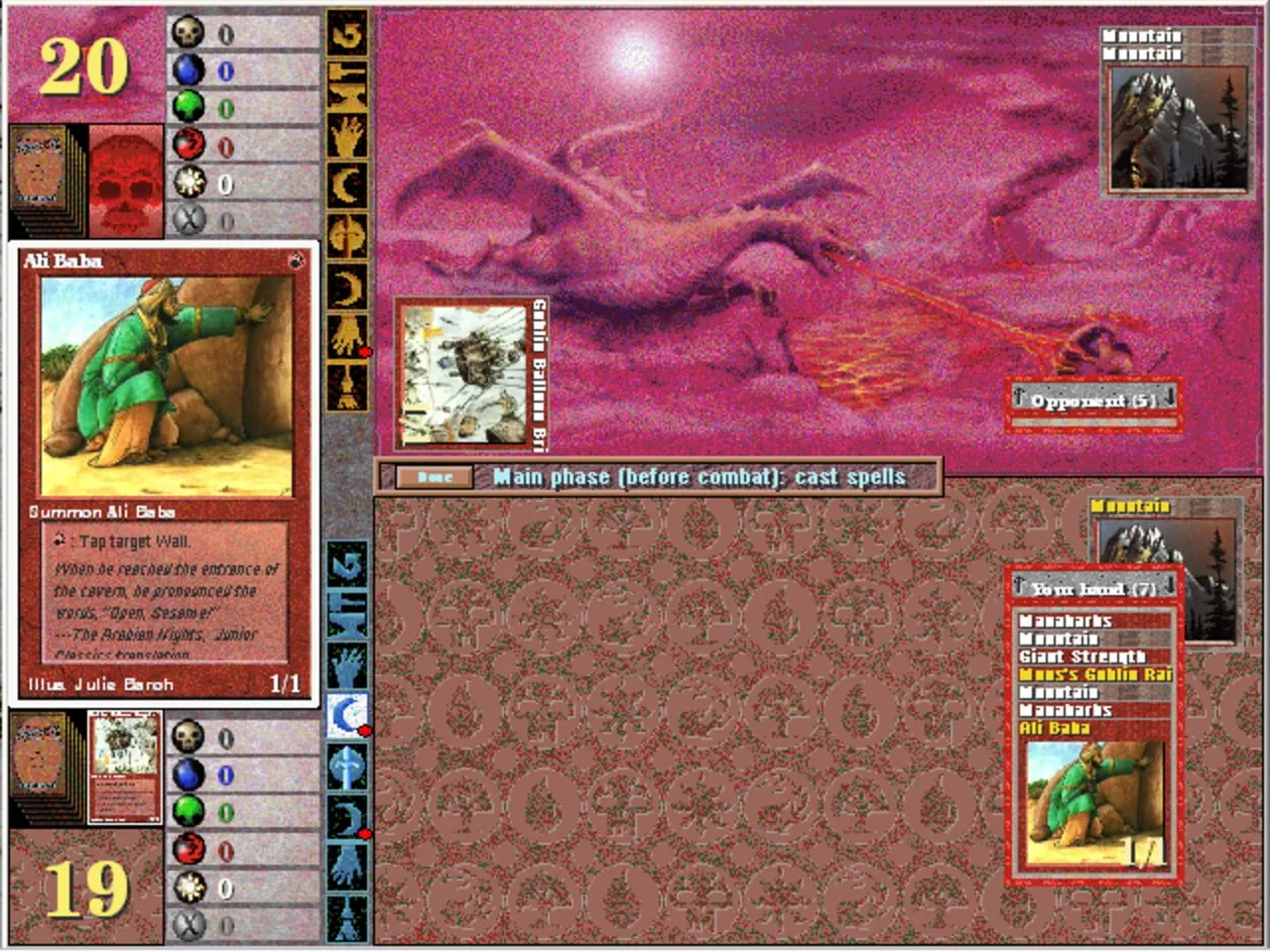
Magic: The Gathering (1997)
Magic: The Gathering is a 1997 strategy video game made by MicroProse Software, Inc..
Set in the plane of Shandalar, MicroProse's 1997 adaptation of Magic: The Gathering is the rare card game that feels like a proper RPG. The player wanders an overworld, dueling random wizards and monsters to claim their cards, all while five color factions jostle for dominance across the land. Letting any single color grow too powerful tips the plane into chaos, so you balance threat and temptation at every step. The whole thing builds toward Arzakon, a planeswalker who wields a deck drawn from all five colors.
Similar games
Explore Magic: The Gathering guides
Magic: The Gathering in our writing
- Companion guide: MicroProse: Flight Sims, Sid Meier and the Empire of One More Turn
A few thoughts on Magic: The Gathering
Fallout: New Vegas shares the same faction-balancing tension: let one faction dominate and the world suffers, in an open world that rewards careful exploration. The Witcher 3: Wild Hunt captures the same feeling of wandering a dangerous plane, gathering power, and facing a final threat with everything you've built. Both reward patience and preparation.
Games where collecting items shapes how you fight
In Shandalar, every enemy you defeat potentially hands you a card that reshapes your strategy. The loop of acquisition feeding into a decisive showdown is satisfying in a way few adaptations capture. These games share that same compulsive pull: gathering resources between encounters until you have exactly the build you want.