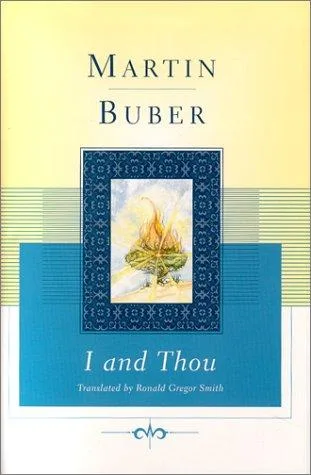
Ich und du (1923)
Ich und du is a 1923 god book written by Martin Buber.
Martin Buber built his philosophy on a single distinction. We can meet the world as I-It, treating people and things as objects to use and measure, or as I-Thou, entering a genuine relation with our whole being. Published in 1923, this short and demanding book argues that these true encounters between persons carry an echo of the encounter with God, and that biblical faith rests on the possibility of real dialogue across an infinite distance. Buber writes in a compressed, almost lyrical German that Walter Kaufmann and Ronald Gregor Smith later carried into English.
Similar books
Explore Ich und du guides
A few thoughts on Ich und du
Martin Buber's I-Thou reshaped how theologians and therapists talk about presence and encounter. Readers moved by it tend to seek out other spare, searching works on how one person truly meets another, since this book has never had a screen adaptation of its own.
Slim nonfiction books that reframed an entire way of thinking
I and Thou runs under a hundred pages but permanently changed how philosophers, theologians and ordinary readers talk about relation and presence. Four Thousand Weeks does something similar with how we think about time, Manufacturing Consent rewrote the conversation around media and power, Debt overturned assumptions about where money itself comes from, and The New Jim Crow forced a reckoning with mass incarceration that reshaped the whole debate.