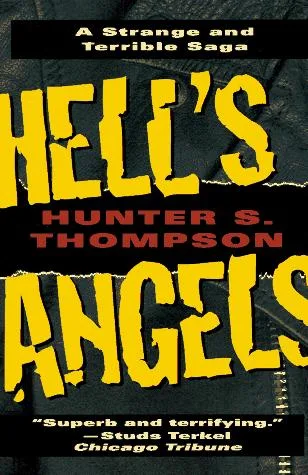
Hell's Angels (1966)
Hell's Angels is a 1966 gonzo book written by Hunter S. Thompson.
For almost a year Hunter S. Thompson rode with the California Hells Angels, drinking with them, riding with them, and watching the myth the press had built collide with the men underneath it. This is his first book, written before the gonzo label stuck, and it already carries the voice: pugnacious, funny, alert to hypocrisy on every side. Thompson tracks how a few hundred outlaw bikers became a national panic, and what that fear revealed about the country doing the fearing. The bond with the club did not last, and he is honest about why. It reads like the raw ore of everything he wrote after.
Explore Hell's Angels guides
A few thoughts on Hell's Angels
Gimme Shelter, the Maysles brothers' film of the The Rolling Stones at Altamont, catches these same Angels a few years on and the moment the outlaw romance curdles on camera. For the club as ongoing drama, Sons of Anarchy carries Hunter S. Thompson's fascination with brotherhood, violence, and private codes into serialized fiction.
Reporters who lived inside the world they were covering
Thompson spent close to a year drinking and riding with the California Hells Angels before he wrote a word about them, and the book keeps the discomfort of that access on the page. These reporters made the same bargain: months inside a closed world, notebooks out, and no safe distance from the people they were describing.
Outlaw lives written with style, starting with Thompson's own
Hell's Angels came before the gonzo label stuck, and the voice is already loaded: first person, funny about its own bad judgement, alert to everyone's hypocrisy including the author's. These books and films work the same vein, from Thompson's later Vegas run to the attorney who rode along in it and wrote his own.
Outlaw bikers on film, from the myth to the road
The Hells Angels became a national story in 1965, and the studios were shooting biker pictures within a year. Thompson watched that machinery from inside the club and wrote about what the cameras kept missing. These are the myth as the screen built it, plus the Altamont documentary that put the club at the center of the decade's worst afternoon.
Crime sagas that treat the gang as a business
Thompson found fewer demons and more broke mechanics than the headlines promised: a few hundred men with bad bikes, worse jobs, and a scrapbook of their own press. These series work the same seam, tracking payrolls and territory and the distance between what a crew claims to be and what its ledger says.