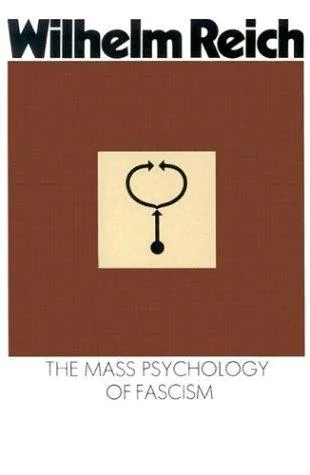
Die Massenpsychologie des Faschismus (1946)
Die Massenpsychologie des Faschismus is a 1946 politics and government book written by Wilhelm Reich.
Wilhelm Reich, an Austrian psychoanalyst and psychiatrist, published this in German in 1933. His subject is consent: the question of why populations hand power to fascists and authoritarians instead of refusing them. Reich locates his answer in sexuality. Repression imposed through political and ideological authority, he argues, produces masses trained to obey, and fascist movements draw their strength from that training.
The method is psychoanalytic and the tone is polemical. Reich treats ideology as something that works beneath argument, in habits formed long before anyone casts a vote. Expect a case pressed hard rather than a survey, with the clinic and the crowd held in one frame. The book stands among the earliest attempts to explain the popular appeal of fascism in psychological terms rather than economic ones.
Treat it as Reich's argument, his alone, and one readers have contested ever since. His later theories moved outside what science supports, and this book carries no settled authority. The edition catalogued here dates from 1946.
Similar books
Explore Die Massenpsychologie des Faschismus guides
A few thoughts on Die Massenpsychologie des Faschismus
For the mechanism Reich describes, watch The Wave, a German classroom drama in which ordinary students discover how fast a group can organize itself around obedience. A Special Day moves the same question into a Rome apartment block on the day of a Hitler state visit, where private desire and public conformity sit a wall apart. The Damned follows a German industrial dynasty through the early Nazi years and binds sexual power to political power, which is Reich's central move staged as family tragedy. On television, Mussolini: Son of the Century dramatizes the rise of Italian fascism from inside the movement, while How to Become a Tyrant lays out the steps of consolidation as documentary. Hitler: A Film from Germany turns the same material into seven hours of staged national fantasy. Pasolini's Salo, or the 120 Days of Sodom pushes the connection furthest and is brutal about it.