Diablo (1996)
Diablo is a 1996 role-playing (rpg) video game made by Blizzard North.
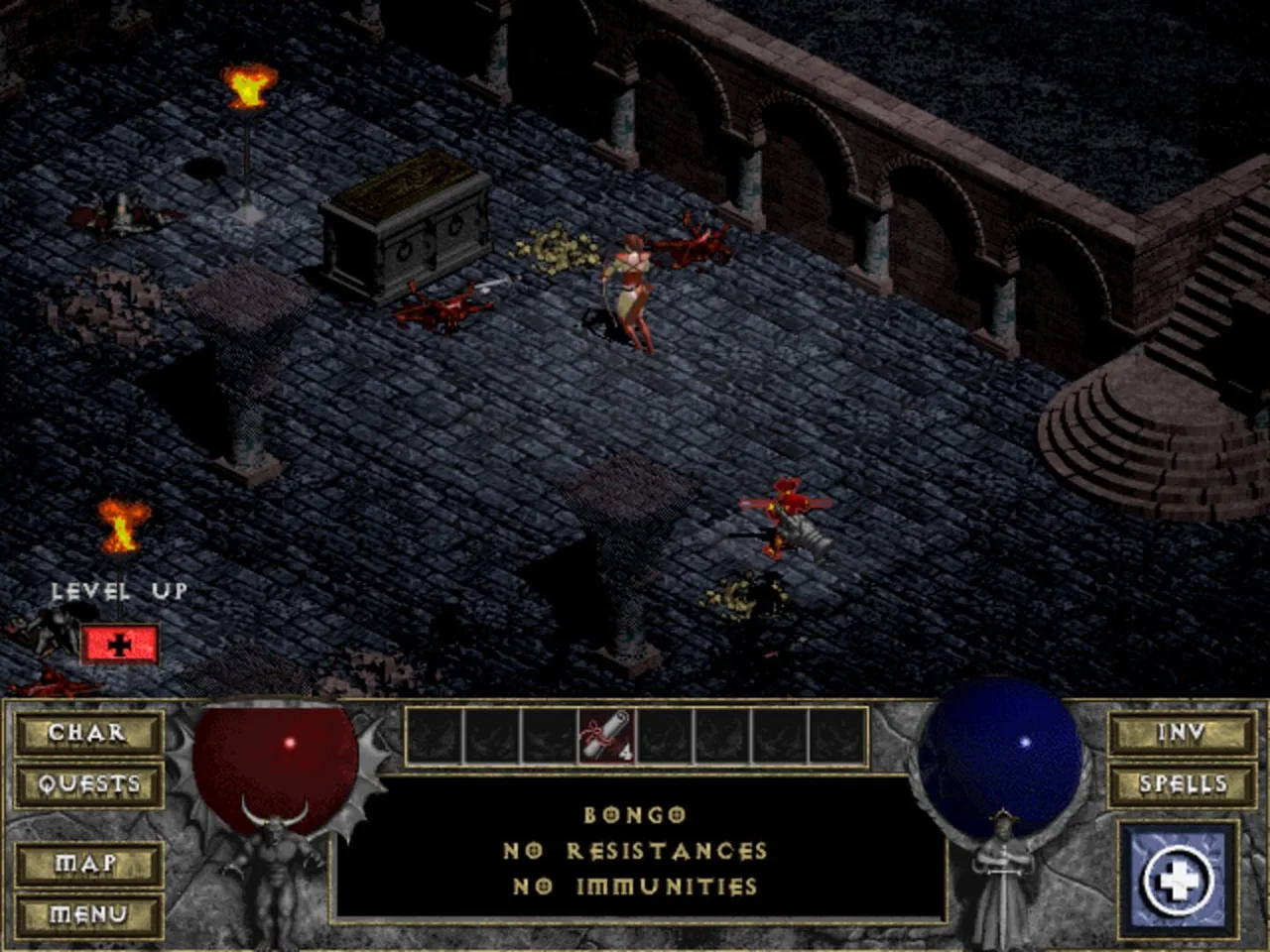
The original Diablo puts you in the town of Tristram, directly above a cathedral whose dungeon levels descend toward something ancient and wrong. The game is isometric, the dungeons are randomized each run, and the loop is brutal and spare: find better gear, go deeper, survive. Released in 1996, it defined the action-RPG dungeon-crawler subgenre almost from scratch. The atmosphere is genuinely bleak for its era, built as much from ambient sound and flickering torchlight as from its monsters, and it still holds up as a work of deliberate, economical dread.
Similar games
Explore Diablo guides
Diablo in our writing
- Companion guide: Angels & the Divine
- Companion guide: Blizzard Entertainment: StarCraft, Diablo, Warcraft and the Art of Polish
- Companion guide: The CRPG: The Complete Guide to Computer Role-Playing Games
- Companion guide: Deals with the Devil
A few thoughts on Diablo
Diablo is the original game soundtrack released as a standalone album, and Matt Uelmen's score is a major reason the game's tone lands so hard. Put it on and the atmosphere comes back immediately.
Heavy metal loud enough for a demon-slaying dungeon crawl
Diablo builds dread out of flickering torchlight and a slow, punishing combat rhythm, and these albums work the same register. Iron Maiden's occult sprawl on The Number of the Beast and Piece of Mind, Judas Priest's mechanized aggression on Painkiller, Death's raw early filth on Leprosy, and Blind Guardian's fantasy-steeped power metal on IX Equilibrium all match the grind toward Tristram's cathedral.
Dark fantasy where you fight monstrous, otherworldly evil
Diablo's loop never changes: descend, kill monstrous things, get stronger, descend again. The Witcher 3 and Skyrim offer that same grind through dark fantasy worlds thick with dungeons and beasts, God of War swaps demons for gods without losing the brutality, and Supernatural, Inuyasha and Fullmetal Alchemist chase comparable otherworldly evil across television and manga.
Horror that traps you and doesn't let go
The dread in Diablo comes from isolation and slow-building wrongness, not jump scares, and these picks build the same kind of atmosphere. Tomie's creeping body horror, American Psycho's cold detachment, Mr. Mercedes' patient menace, and FROM's inescapable small town all trap their audience in a mood that never fully releases, the way Tristram's cathedral never does.