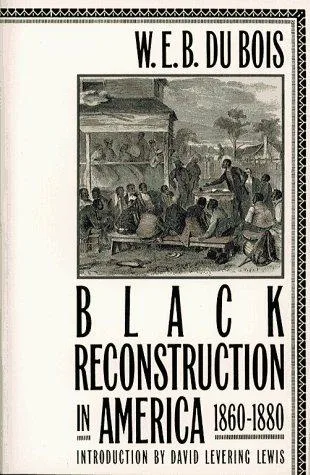
Black reconstruction in America 1860-1880 (1964)
Black reconstruction in America 1860-1880 is a 1964 reconstruction (u.s. history, 1865-1877) book written by W. E. B. Du Bois and Eric Foner.
W. E. B. Du Bois set out to correct the record on Reconstruction, and in doing so wrote one of the landmark works of American history. First published in 1935, the book rejects the reigning academic account of its day, which dismissed the postwar decades as a failure and erased what Black Americans achieved in them. Du Bois instead centers the agency of formerly enslaved people during the Civil War and its aftermath, reading the period as a genuine, thwarted chance to build a worker-led democracy in place of the plantation economy. Rigorous and argumentative, it reframed how the era is understood.
Similar books
Explore Black reconstruction in America 1860-1880 guides
A few thoughts on Black reconstruction in America 1860-1880
BioShock Infinite drags American myths of race and exceptionalism into the open, making it a striking companion to W. E. B. Du Bois's argument. Oppenheimer sits with another turning point in the national story, weighing ideals against the machinery of power. Both reward anyone who wants history examined rather than flattered.
Landmark nonfiction that reclaims an overlooked history
Du Bois wrote Black Reconstruction to correct a record that erased Black achievement. These works share that revisionist nerve, landmark nonfiction and memoir that recover overlooked history and insist on telling it from the ground up rather than from the comfort of the top.
Historical dramas about power and who gets to rule
Du Bois read Reconstruction as a struggle over who holds power. These historical dramas dig into that same question, following the rise and fall of dynasties, factions and empires where ambition, class and control decide who ends up ruling and who ends up ruled.
Films that dramatize real people and pivotal moments
Black Reconstruction turns dense history into gripping argument. These films do similar work on screen, dramatizing real people and the turning points that shaped them, letting ambition, conscience and consequence collide against the backdrop of events that actually happened and still echo through the present day.
Graphic novels that reimagine history and political power
Du Bois reframed a whole era of American history. These graphic novels take a similar swing at the past, reimagining political power, revolution and empire to ask who gets to write history and whose version the rest of us end up inheriting.