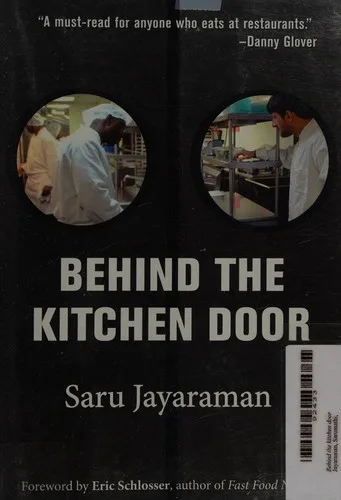
Behind the kitchen door (2013)
Behind the kitchen door is a 2013 employees book written by Sarumathi Jayaraman and Eric Schlosser.
Saru Jayaraman builds her reporting from the workers who keep American restaurants running and rarely get seen: line cooks, dishwashers, bussers, and servers living on sub-minimum wages and tips. She lays out the industry's underside of thin benefits, unsafe kitchens, racial sorting of who lands the front-of-house jobs, and the harassment women endure to hold onto a shift. The sharpest point cuts at the ethical restaurant that pours fair-trade coffee while underpaying its own staff. Grounded in real workers' testimony, the book asks readers to weigh the hands behind every plate they are served, and what a fair meal would actually cost.
Similar books
A few thoughts on Behind the kitchen door
The FX series The Bear dramatizes the same kitchen pressure, exhaustion, and dignity Sarumathi Jayaraman documents. Food, Inc. and the Fast Food Nation film follow labor down the food chain with a matching investigative eye. For the cook's own account of who really staffs a restaurant, Anthony Bourdain's No Reservations turns the camera on the people working behind the pass.
Life on the line, dramatized
Behind the Kitchen Door follows the line cooks, dishwashers and servers customers rarely see, and these four works put that same kitchen pressure on screen and page. The Bear dramatizes the chaos of a working kitchen, East Side Sushi follows a cook fighting to move up past the line, Spin Me Round skewers restaurant-chain culture from the inside, and Waiter Rant tells the front-of-house side in one server's own voice.
Fast food and factory-farm exposes for readers who want more
Jayaraman's reporting sits beside a wider shelf of muckraking food journalism. Food, Inc. and Fast Food Nation trace the same industrial food chain from field to counter, Chew on This retells that reporting for younger readers, The Meat Racket follows the same underside into the chicken industry, and Reefer Madness applies the same patient, ground-level method to marijuana, pornography and migrant labor.
The workers labor law keeps overlooking
Behind the Kitchen Door lays out sub-minimum wages, unsafe kitchens and racial sorting in who gets which job, and these eight works cover that same overlooked labor. Disposable Domestics and Pink Collar Workers examine other underpaid, undervalued jobs, Why Unions Matter and The Wages of Whiteness dig into the history behind that inequality, and Beneath Us and Cart dramatize undocumented and striking workers on screen.